
US Spring Crop Update
- Monday, September 29, 2003
This analysis featured in the September 29, 2003 issue of the HGCA's MI Prospect, Volume 6, Number 7
Key points
- Spring wheat yields good but supply not burdensome
- Sharp decline in maize and soya crop conditions in August
- Too late to harm maize but soya hit hard
- US prices more influenced by world situation than in 2002
US spring sown crops are key to world quality wheat and feedgrain supplies and prices, as well as oilseeds. The 2003 spring wheat crop yielded well, but low harvested area and stocks means supplies are not burdensome. Hot weather in the widwest in late July and early August did little damage to maize but dramatically impacted on soybean prospects.
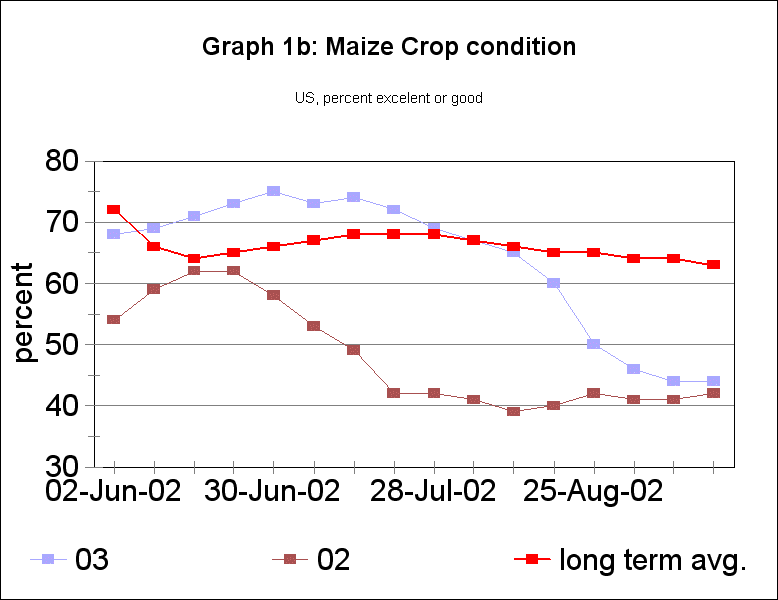
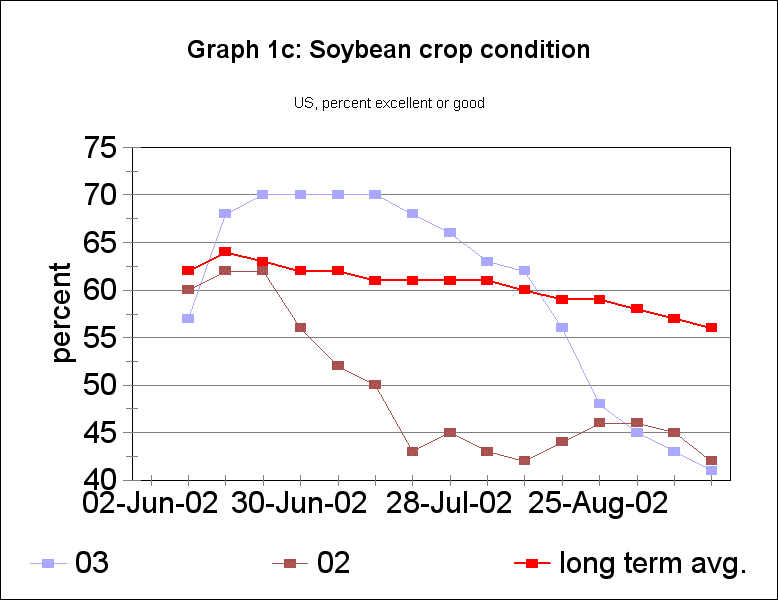
US spring planted crops generally got off to an excellent start with favourable development conditions in the spring and early summer. Planting over much of the US corn belt was delayed by wet field conditions, but the delays were not significant and the benefit of good soil moisture was soon apparent(See Chart 1). For most of June and July crop conditions were above long term averages and very much better than last year. Hot and dry conditions in late July and through August over much of the spring grain and oilseed producing areas have, however, reduced yield potential for late maturing crops, particularly for soya beans.
continueChart 1: US Crop condtions, percent good or excellent.

Source: USDA
continued
This contrasts with last year when dry conditions earlier in the season had a more marked impact on spring wheat and maize yields, while later maturing soya bean crops went largely unscathed.
Spring Wheat
US spring wheat crops, harvested during August, had generally matured before the hot weather set in and its impact was almost certainly positive in a quality context. Harvest was all but completed by the third week of the month under near ideal conditions. The USDA estimates a yield of 2.46 tonnes per hectare for spring wheat other than durum, compared with last year’s 1.97 and a five-year average of 2.25(see Table 1). However, this was off a relatively small harvested area of 5.2 million hectares, compared to a five-year average of 6.2 million hectares.
Table 1: US  Grain and Oilseed Production
------------------------------------------------------------------------
                    Harvested      Yield          Production
	           million hct   tonnes/hct	million tonnes   percent
Crop                2002  2003   2002  2003    5-yr   2002   2003 of 5yr
                                                avg                  avg.
-------------------------------------------------------------------------
Winter Wheat        12.0  14.8   2.59   3.16   45.5   31.1   46.6    103
Other Spring Wheat   5.4   5.4   1.97   2.46   14.7   10.7   13.4     91
Durum Wheat          1.1   1.1   1.98   2.15    2.7    2.2    2.4     89
Total wheat         18.5  21.3   2.37   2.93   62.8   44.0   62.4     99
Maize               28.1  29.1   8.16   8.69  242.9  228.8  252.6    104
Sorghum              3.0   3.3   3.18   3.20   13.9    9.4   10.4   0.75
Barley               1.7   2.0   2.95   3.09    6.8    4.9    6.1   0.90
Oats                 0.8   0.9   2.04   2.33    2.2    1.7    2.2   1.01
Soybeans            29.2  29.4   2.54   2.45   74.2   74.3   71.9   0.97
Cottonseed                                             5.6    5.6
Peanuts              0.5   0.5   2.87   3.50           1.5    1.8
Sunflowers           0.9   0.9   1.27    n/a           1.1    n/a
Canola               0.5   0.5   1.36    n/a           0.7    n/a
Flaxseed             0.3   0.2   1.12    n/a           0.3    n/a
-------------------------------------------------------------------------

Source:  USDA September 2003 Production Projections.
Total production is projected to be 13.4M tonnes, 25 percent above 2002 output but still about 9 percent below the five-year average. With a carryover of only about 2.7M tonnes, the lowest in at least 25 years, total supplies of hard red spring wheat, the principal class of spring wheat, cannot be regarded as burdensome.
Durum wheat yields also recovered from last years drought reduced levels, but as with other spring wheats a relatively small area and minimal carryover will mean that US durum supplies for a second successive year will do little more than cover domestic requirements.
Coarse Grains
While the condition of the US maize crop, as related by subjective crop reports, deteriorated since mid July, the more objective yield estimates of the USDA indicate that the loss in yield has not been great. The projected yield of 8.69 tonnes per hectare comes second only to the record yields of 1994, and projected production of 252.6M tonnes would also only be second to 1994. Critical for maize yields are moderate temperatures and moisture during silking which occurred before the hot and dry weather set in. The USDA only reduced its maize yield projections by a modest 0.09 tonnes per hectare during August.
Until relatively recently crop of this size would have had, and certainly in 1994 did have, a very adverse impact on world feed grain markets. US domestic demand has increased significantly over the last ten years with growth in demand for ethanol being particularly note worthy. The USDA is projecting US corn exports of 45.7M tonnes. While this is 12.5 percent above last year’s exports following the drought reduced 2002 crop, it is about two percent below 10 year average US maize exports.
A distant second in importance to maize as a feed grain is sorghum. Grown mainly in Kansas and Texas as a dry alternative to maize in winter wheat areas increased acreage and yields are projected to result in a crop of 9.4M tonne crop, a ten percent decline from 2002. The USDA projects sorghum exports of about 4.4M tonnes and, hence, it is not as big an influence in international coarse grain markets as maize. Oats and barley in the US are only grown for local niche markets and in a limited number of areas where maize production is not an option. The US is a net importer of both these grains.
Oilseeds
Although the adverse late summer crop development conditions came too late to have much impact on grains, they have reduced significantly US soya bean crop prospects. Soya beans are particularly sensitive during August when pods are filling. Over the month of August the USDA reduced its yield projection by eight percent to 2.45 tonnes per hectare. Not only is this below the 2002 yield, but also four percent below long term average US yields.
The USDA projects soya bean production at 71.9M tonnes, the smallest crop since 1996. This was before the US soybean area stabilized at about 72 million acres five years ago after a period of consistent growth.
Both world and US oilseed supply balances have been relatively tight, as much a consequence of continuing growth in consumption as poor harvests. With the prospects of a disappointing US soyabean crop the oilseed supply situation is likely to remain tight.
Other US oilseed crops, in order of importance, are cottonseed, peanuts, sunflowers, oilseed rape and flaxseed. But together they contribute less than ten percent of total US oilseed crop output. And, except in the context of salad oil niche markets, they are of little significance.
Prices
There is little doubt that American markets have been more influenced by crop developments elsewhere in the world than they were a year ago. Certainly prices for the major grains drifted lower until late July while US crop conditions suggested increased supplies(see Chart 2). In mid July the US wheat market, however, rose as a reaction to declining crop prospect in Europe and to the east, at a time when US wheat crop prospects were beyond the influence of weather.
During August the declining prospects for crops on both sides of the Atlantic appeared to keep most markets moving up. But following the September 11 USDA crop production projections, indicating that August’s adverse crop development weather had not had a material impact on potential output, soya beans apart, grain prices lost most of their gains of the previous month. Oilseed prices continued to rise.
Adjustments to US crop production projections and estimates could still have a material impact on market prices, but the market is increasingly focussing on demand prospects. The situation this year is almost certainly less challenging than last year when there was a major challenge in the context of Black Sea port prices being at a substantial discount to US Gulf prices.
David Walker
phone: 01603 705153
top of page